
Recover Deleted Photos on Windows With a Safer Local Workflow
Deleted photos are often recoverable only while their storage space has not been reused. The safest workflow is to stop new writes first, then check easy restore paths, scan locally, preview image files, and save selected photos to a different physical drive.
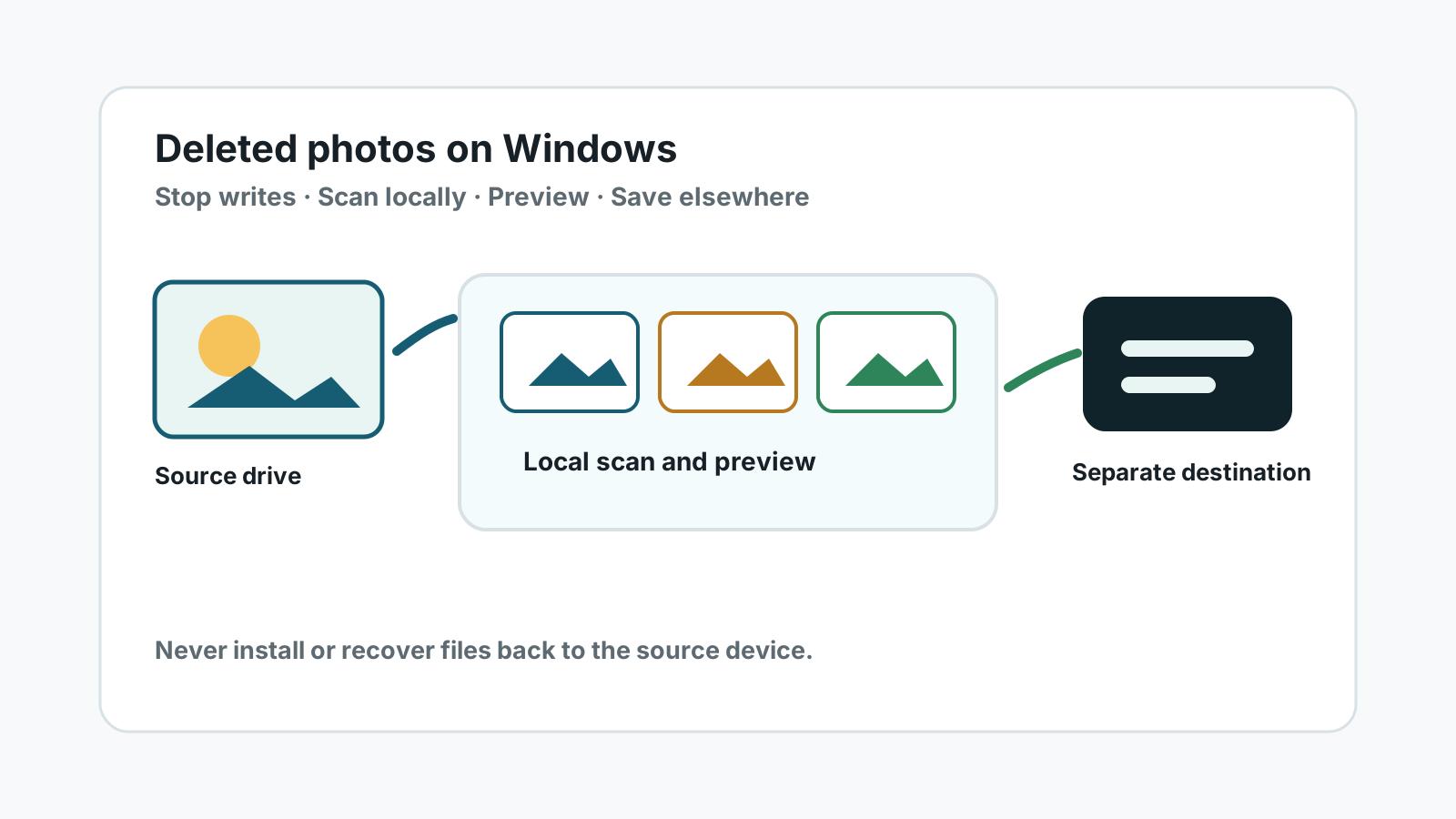
First steps after deleting photos
- Stop taking photos, copying files, downloading apps, or editing images on the source device.
- If the photos were on the Windows system drive, avoid installing recovery tools to C: when possible.
- Prepare a separate physical drive with enough free space for recovered photos.
- Do not run repair or format commands before checking whether the photos can be copied or scanned safely.
Check built-in restore paths first
Recycle Bin
If the photos are still there, restore them directly. This usually preserves names, folders, and timestamps.
Cloud and backups
Check OneDrive, File History, Previous Versions, camera import folders, and external backups before scanning.
Local scan
If no restore copy exists, scan the affected disk, USB device, external drive, SD card, or memory card locally on Windows.
Real limits
Overwrite, SSD TRIM, damaged metadata, physical failure, and fragmented media can all reduce what opens correctly.
A safer Recovery Studio workflow for photos
1. Select the original source
Choose the drive, partition, USB drive, external drive, SD card, or memory card where the photos were deleted.
2. Scan locally
Scan for common image formats such as JPG, PNG, TIFF, HEIC, and supported camera RAW signatures where available.
3. Preview before exporting
Use preview to prioritize photos that open correctly instead of relying only on generated deep-scan names.
4. Recover to another physical disk
Saving recovered photos back to the source can overwrite photos that have not been recovered yet.
Realistic photo recovery limits
- No software can promise 100% recovery.
- Deep scans may find image content but not original filenames or folder paths.
- Some thumbnails may open while the full-size original is damaged or incomplete.
- Large fragmented media and physically failing devices may need specialist help.
FAQ
Can deleted photos always be recovered on Windows?
No. Recovery depends on whether photo data was overwritten, whether the device is readable, and whether the recovered image data is complete enough to open.
Should I install photo recovery software on the same drive?
No. Installing to the source drive can write new data over deleted photos.
Will recovered photos keep their original names?
Sometimes. If file system metadata is missing, deep scan results may use generated filenames and may lose the original folder structure.
Where should recovered photos be saved?
Save recovered photos to another physical disk, not the source drive, SD card, USB drive, or external disk.